
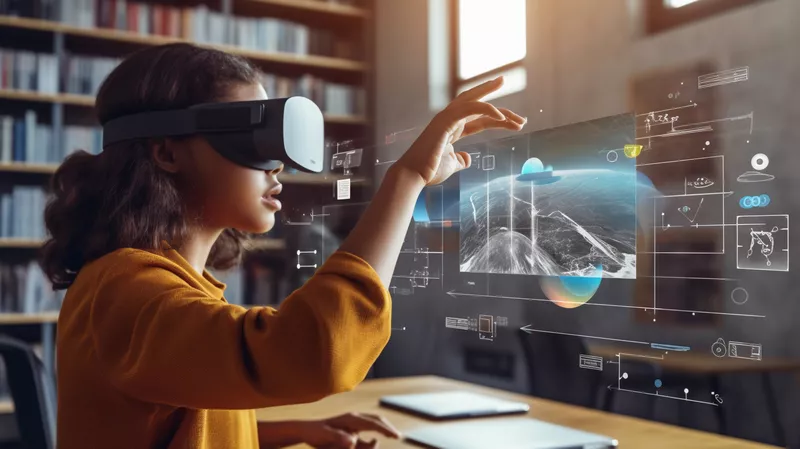
Virtual Reality in Education is transforming the way students learn and teachers teach in today’s digital era. Instead of just reading from textbooks, learners can now step inside virtual worlds and experience lessons as if they were real. From exploring the human body in 3D to taking a virtual tour of the solar system, VR makes learning more exciting, interactive, and effective. This innovative technology bridges the gap between imagination and reality, turning ordinary classrooms into dynamic spaces for creativity and discovery. Education has always evolved with technology from blackboards to smartboards, and now to Virtual Reality (VR). Virtual reality in education is not just a futuristic idea anymore, it’s already transforming classrooms around the world. By creating realistic and interactive 3D environments, VR helps students learn in ways that are more engaging, practical, and memorable.
What is Virtual Reality in Education ?
Virtual Reality (VR) in education refers to the use of advanced 3D computer-generated environments that allow students to explore, interact, and learn through simulated experiences. Instead of simply reading from textbooks or watching videos, learners can enter a virtual world using VR headsets such as the Oculus Rift, HTC Vive, or even mobile-based devices like Google Cardboard. This technology creates an immersive learning environment where students feel as if they are physically present inside the lesson itself.
Virtual Reality brings lessons to life by turning abstract concepts into tangible experiences. For instance, a biology student can walk inside the human body to explore organs and systems in 3D. A history student can travel back in time to visit ancient Egypt, the Roman Empire, or World War battlefields. Similarly, a physics learner can perform complex experiments in a virtual lab without worrying about safety hazards or costly equipment.
The main goal of VR in education is to make learning more engaging, memorable, and effective. It supports experiential learning – the idea that students learn best by doing, not just observing. By using VR, teachers can explain difficult concepts visually, helping students understand faster and retain information longer.
Moreover, Virtual Reality encourages curiosity, creativity, and collaboration among students. It can also help learners with disabilities by providing personalized learning experiences that suit their pace and comfort. From virtual field trips to interactive science experiments, VR has the power to transform traditional classrooms into dynamic spaces of exploration and discovery.
In short, Virtual Reality in Education is revolutionizing the way students learn – making education not just informative but truly immersive and inspiring.
How Virtual Reality Works in Classrooms
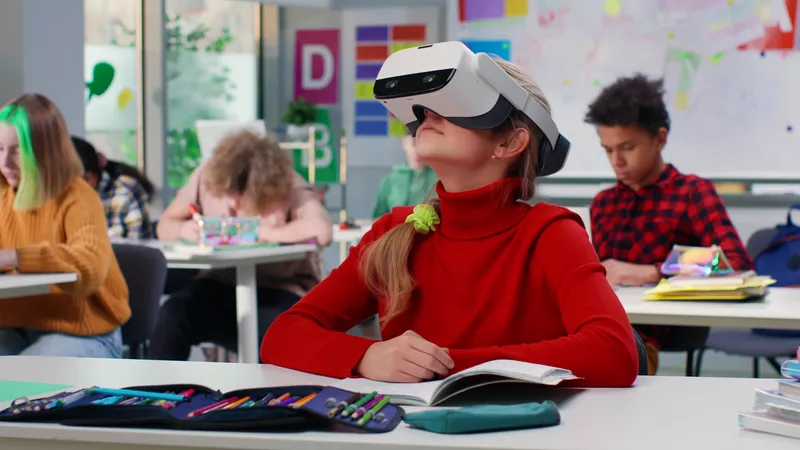
Virtual Reality (VR) works in the classroom by creating an immersive digital learning environment where students can experience lessons rather than just read or hear about them. With the help of VR headsets, 3D content, and interactive software, classrooms are transformed into virtual spaces where students can explore, interact, and learn in new and exciting ways.
To begin, teachers use VR-compatible devices like Oculus Rift, HTC Vive, or affordable headsets such as Google Cardboard, connected to smartphones or computers. Once the VR setup is ready, students put on their headsets and enter a 3D virtual environment designed for their subject. For example, during a geography lesson, students might explore Mount Everest or dive into the ocean to study marine life – all from their desks.
Teachers can guide students through these experiences using educational VR apps such as Google Expeditions, Unimersiv, or ClassVR. These applications contain a wide range of pre-designed virtual lessons and simulations that align with school curriculums. Some VR systems also allow teachers to control what students see, pause experiences, and ask questions Turning a virtual trip into a real-time interactive class discussion.
VR also supports hands-on learning. For instance, in a virtual science lab, students can mix chemicals safely, or in engineering class, they can build and test models in a digital space. This not only enhances understanding but also builds confidence by allowing experimentation without real-world risks.
Overall, Virtual Reality works in classrooms by blending technology with education, making learning visual, interactive, and memorable. It helps students grasp complex topics faster, keeps them engaged, and transforms ordinary lessons into extraordinary experiences that inspire curiosity and creativity.
Benefits of Virtual Reality in Education
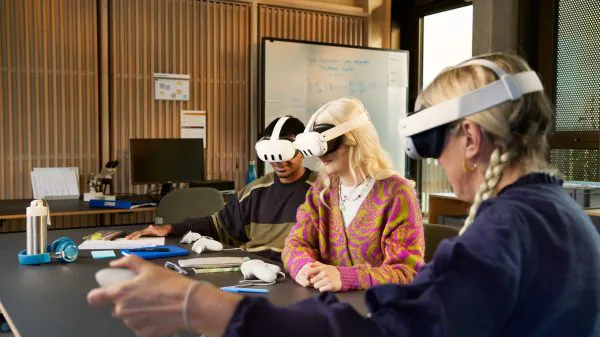
Virtual Reality (VR) offers a wide range of benefits in the education sector, completely transforming how students learn and teachers teach. It turns traditional lessons into interactive and engaging experiences, helping students understand complex topics more easily.
One of the main benefits of VR in education is that it makes learning immersive and engaging. Instead of reading about historical events or scientific concepts, students can experience them in a realistic 3D environment. For example, they can explore ancient civilizations, visit outer space, or observe chemical reactions up close – all from their classroom. This hands-on experience improves understanding and boosts memory retention.
Another major advantage is safe and risk-free learning. In a virtual lab, students can conduct dangerous experiments or explore extreme environments without any real danger. This allows them to learn through trial and error, which is one of the most effective ways to gain practical knowledge.
VR also supports personalized learning. Every student learns at their own pace, and virtual reality allows teachers to adapt lessons based on individual needs. It helps students who struggle with traditional teaching methods by giving them a visual and interactive way to learn.
In summary, the benefits of Virtual Reality in education include improved engagement, deeper understanding, safety, creativity, and accessibility – making learning more enjoyable, memorable, and future-ready.
The Future of VR in Education
The future of Virtual Reality (VR) in education looks incredibly promising. As technology continues to advance, VR is expected to become an essential part of classrooms around the world. It will not only enhance the way students learn but also redefine the entire education system by making learning more interactive, accessible, and personalized.
In the coming years, schools and universities are likely to adopt affordable and portable VR devices for everyday teaching. Instead of traditional textbooks, students will use immersive simulations to explore concepts in science, history, geography, and even art. For example, learners might attend virtual field trips to the pyramids of Egypt, explore the surface of Mars, or dissect a human heart in 3D – all from their desks.
The integration of Artificial Intelligence (AI) with VR will make education even more powerful. AI-driven VR tutors will be able to analyze a student’s performance, identify their weaknesses, and provide personalized lessons based on their learning pace. This will create a customized education experience for every learner.
In the future, Virtual Reality will also play a vital role in career training – helping medical students practice surgeries, engineers test designs, and pilots train in flight simulators.
Summary
Virtual Reality in Education is transforming traditional learning into an exciting, interactive, and immersive experience. Instead of reading about topics in textbooks, students can now experience lessons in 3D virtual environments using VR headsets. This technology allows learners to explore the human body, travel through space, visit historical places, or conduct scientific experiments – all within a safe digital space.
VR makes education more engaging, memorable, and personalized. It helps students understand complex concepts easily and keeps them motivated to learn. Teachers can also use VR tools to create real-life simulations and virtual classrooms that promote collaboration and creativity.
In short, Virtual Reality bridges the gap between imagination and reality, turning ordinary classrooms into dynamic spaces of exploration. It represents the future of modern education – one where learning is not just seen or heard, but truly experienced.